.png)
Thriving Within Limitations: How to Manage Athletic Fields During Local Water Restrictions

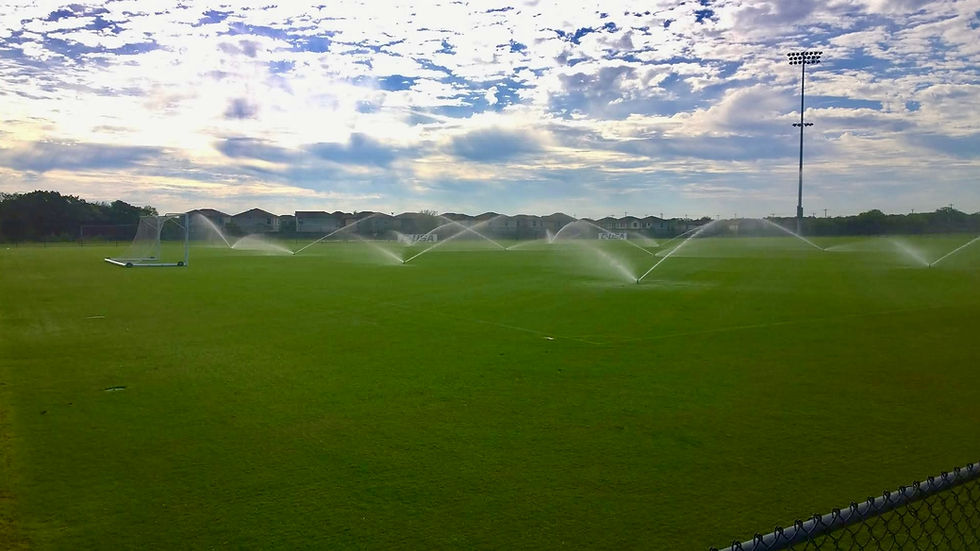
Water is the foundation of healthy turf, but what happens when your supply is limited?
Across Texas and beyond, watering restrictions are becoming more common and more severe. For athletic field managers, that means finding ways to preserve safety and playability even when traditional irrigation routines are off-limits.
Here are 6 practical, proven strategies to keep your fields growing, even during drought or local watering cutbacks.
Embrace Smarter Irrigation Technology
When water is scarce, efficiency isn’t optional, it’s essential.
Modern irrigation tools make it possible to water only when and where it’s truly needed. Consider investing in:
Weather-based smart controllers that adjust automatically based on forecast data
Soil moisture sensors that monitor conditions in real time
Flow sensors and smart valves to detect leaks or inefficiencies
Zone-based scheduling to optimize runtime based on microclimates
Even modest upgrades to your system can dramatically improve water efficiency and field resilience.
Explore Irrigation Variances
If your city or water district offers them, an irrigation variance could be a game-changer.
A variance allows limited exceptions to watering rules for high-use fields, especially when player safety is at stake. To pursue one:
Contact your local water purveyor and request details on the variance process
Gather data on irrigation needs, system specs, and player safety concerns
Build a proposal that highlights water-saving measures and responsible management
Maintain open communication throughout the review process
A well-prepared variance request shows you're not just asking for more water, you’re advocating for safe play within a conservation-minded framework.
Need help applying for a variance? Check out our article How to Apply for an Irrigation Variance
Watering Strategically
When you're limited on gallons, every drop has to count.
Focus water on:
High-wear zones like goalmouths, center circles, and sidelines
Drought-prone areas based on slope, sun exposure, or poor soil
Recently sodded or overseeded sections that require more water during establishment
Use spot watering or manual methods in these areas, and adjust run times elsewhere accordingly. This approach helps maintain safety and turf coverage while staying compliant with restrictions.
Prioritize Soil Health
Strong turf starts underground. During dry spells, soil quality becomes even more important for moisture retention and drought resilience.
Make sure your soil is optimized by:
Conducting regular soil tests to guide nutrient management
Balancing pH levels and correcting deficiencies
Adding organic matter to improve water-holding capacity
Using wetting agents if appropriate to break through hydrophobic layers
Healthy soil supports deeper rooting, better moisture retention, and faster recovery when water is restored.
Use Cultural Practices to Boost Water Efficiency
Cultural practices help you make the most of the water you do have.
Integrate these methods into your maintenance routine:
Core aeration: Increases infiltration and relieves compaction
Verticutting: Removes thatch and improves surface-level absorption
Topdressing: Protects the crown and helps retain soil moisture
Mowing height adjustments: Taller turf shades roots and reduces evapotranspiration
Done consistently, these strategies extend the effectiveness of limited irrigation and reduce overall water demand.
Educate and Engage Stakeholders
Water management isn’t just a grounds maintenance crew issue, it requires buy-in from your entire organization.
Encourage coaches, players, and staff to:
Respect field closures or altered watering schedules
Avoid unnecessary use or damage during heatwaves or droughts
Report leaks, overspray, or suspicious usage early
By promoting a culture of water stewardship, you not only protect your fields, you strengthen community support for sustainable practices.
Finding the Balance Between Safety and Sustainability
In the face of increasing water restrictions, the goal isn’t just to survive, it’s to thrive within the limits.
With the right tools, targeted strategies, and a proactive mindset, athletic fields can remain safe, green, and game-ready, even when resources are tight.
Ready to Take the Next Step?
If your fields are feeling the heat this summer, now is the time to act.
Upgrade your irrigation plan
Apply for a variance
Or bring in a trusted partner to guide the process
Need help evaluating your fields or preparing your water management strategy? We’ve helped schools and sports complexes across Texas navigate water restrictions successfully, and we’re here to help you do the same.
Let’s keep your fields playable, professional, and protected, no matter the forecast!


Comments