.png)
How Do You Prioritize Sports Field Projects When You Have Budget Surplus?

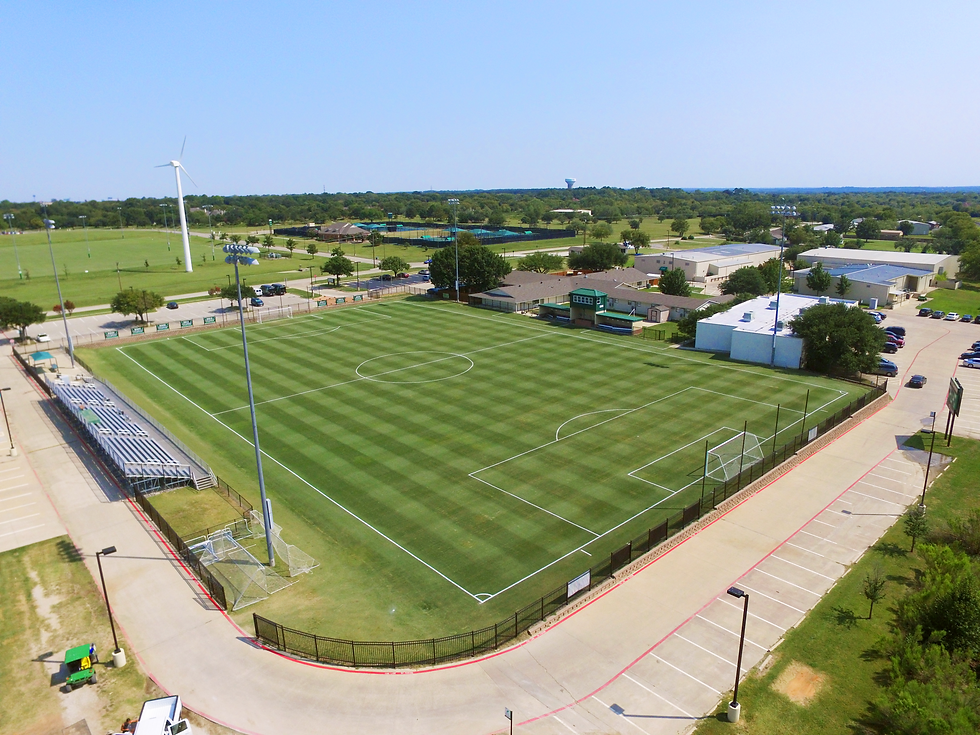
When your field has more than one problem and a limited window to act, spending on the wrong issue first can create more problems than it solves. Here's the triage framework athletic directors and facilities directors use to make the right call with end-of-year surplus funds.
End-of-year surplus budget is one of the most useful tools an athletic director has — and one of the easiest to misuse. Not because administrators make careless decisions, but because field problems rarely come one at a time. Most facilities have two, three, or four things that need attention, all competing for the same limited dollars.
The question isn't whether to spend the money. It's which problem to solve first.
Get that order right and your investment compounds — each project sets up the next one. Get it wrong and you can spend significant money on a visible improvement while the underlying problem quietly continues doing damage.
After more than a decade walking fields alongside athletic directors and facilities managers across Texas, the triage framework we use every time is the same three-tier sequence: safety and playability first, maintenance burden second, aesthetics third. In that order. Every time.
Why does project order matter so much when you're spending surplus field budget?
Because field problems don't exist in isolation — they're connected. Address a surface drainage issue correctly and you reduce compaction, improve turf health, and eliminate the standing water that's been generating parent complaints for two seasons. Address the aesthetics first and the underlying drainage keeps compounding, year after year, underneath whatever you've put on top of it.
The same logic applies to grading, irrigation, and surface repairs. When the root cause goes unaddressed, the symptom always comes back. And the second time around, it usually costs more to fix.
The triage framework exists specifically to prevent this. It keeps you from spending on Item B when Item A is the actual problem — and making Item A more expensive in the process.
What should safety and playability concerns tell you about how to prioritize your sports field projects?
Safety is the non-negotiable first tier. If there's a condition on your field that puts athletes at risk — uneven surfaces, trip hazards, significant drainage failures that leave the surface unplayable, worn high-traffic areas that have lost structural integrity — that's where your first dollar goes. Full stop.
This isn't just the right call from a duty-of-care standpoint. It's the only defensible call if something goes wrong. An injury on a surface irregularity you knew about and didn't address is a conversation nobody wants to have with administration, parents, or legal counsel.
When we walk a facility with an AD who has budget to work with, the first thing we're looking for is what's affecting athletes right now. Not what looks bad from the stands — what's creating actual risk at ground level. Lips and dams that have built up along infield edges. Areas where irrigation heads have settled below grade and created surface inconsistencies. High-traffic zones at goal mouths and baselines that have compacted and sunken over multiple seasons. Ruts from mowing patterns that have hardened into the profile.
These aren't aesthetic problems. They're playability problems. And they're the ones that get addressed first.
How do you identify which field problems are creating the biggest maintenance burden?
Once safety and playability issues are addressed — or if no immediate safety concerns exist — the second tier is maintenance burden. These are the problems that are quietly costing you time, labor, and money every single week.
The clearest example is an irrigation system that isn't performing correctly. Poor head coverage creates dry zones that require hand-watering to compensate. That compensation takes real labor hours, often daily, and still produces uneven results. Turf health suffers. Cultural programs don't respond the way they should. And the labor cost compounds season after season because the underlying problem is still there.
Grading issues belong in this tier too. A field with low spots and poor surface drainage requires more management time after every rain event — delayed practice starts, unsafe conditions, field recovery work that wouldn't be necessary on a properly graded surface. Addressing the grade correctly eliminates that recurring burden.
When you solve a maintenance burden problem, you get your time back. That has real operational value that's easy to quantify and easy to explain to administration.
When does it make sense to address aesthetics with remaining budget?
Aesthetics are the third tier — and they're a legitimate tier. Field appearance matters to athletes, coaches, parents, and administrators. A field that looks good sends a signal about how seriously the program takes its facilities. That signal has real value.
But aesthetics only make sense to address after safety and maintenance burden have been handled — or when your surplus is large enough to address all three in sequence.
The reason is simple: aesthetic improvements built on top of unresolved root cause problems don't last. Sod installed over a drainage problem looks great for one season and then reflects the same pattern of stress the next summer. Surface repairs on a field with a grading issue require re-doing when the grade eventually gets corrected.
If you have budget remaining after the first two tiers are addressed, aesthetics are a great use of it. If you're choosing between an aesthetic improvement and a foundational fix, the foundational fix pays for itself several times over.
What happens when you address the wrong problem first?
The most common version of this we see is a facilities team that identifies a symptom — thin or bare turf, surface inconsistency, field quality that just won't respond to maintenance — and addresses it directly without first diagnosing why it's happening.
Resodding a field with a chronic irrigation coverage problem is the clearest example. The new sod goes in, looks great, and then immediately begins showing the same stress patterns as the turf it replaced — because the coverage gaps are still there. The field may recover eventually with heroic supplemental watering effort, but the root cause hasn't changed. You've spent the budget, the problem is still there, and now you're a year further from solving it.
The second version involves sequencing capital projects in the wrong order. Installing a synthetic surface improvement on a field with significant grading issues, for example, creates a situation where the grading has to be addressed eventually — and when it is, the surface work may need to be redone to match the corrected grade. Both projects get done, but the cost of doing them out of order is paying for the second one twice.
A qualified field professional will tell you when you're looking at a symptom instead of the actual problem — and recommend the sequence that protects your investment rather than the one that's easiest to sell.
How do you move from triage to a decision administration will approve?
Once you've walked the field and identified your priority tier, the internal justification follows naturally from the triage logic.
Safety arguments end budget debates fastest. "This directly reduces injury risk on a surface used by X athletes" is a sentence most administrators won't push back on.
Maintenance burden arguments speak to operational efficiency. "Fixing this reduces recurring labor cost and eliminates a weekly management problem" lands well with administrators who are watching operational budgets closely.
Aesthetic arguments work best when they're tied to program value. "This reflects the standard our program holds itself to and signals to recruits, parents, and the community that we take our facilities seriously."
Whatever tier you're addressing, document the current condition before work begins. Before-and-after photography and a written scope from your contractor give you everything you need to justify the expenditure in a budget review — and build the case for what comes next.
Not sure which problem to tackle first? SFS will walk your facility with you, identify the root cause issues, and give you a prioritized plan — no obligation, just clear expert guidance.
Frequently Asked Questions
How do I know if a field problem is a safety issue or just an aesthetic one?
Safety issues affect athletes at the point of play — uneven surfaces that create trip or ankle hazards, drainage failures that leave standing water or saturated soil, compacted or sunken high-traffic zones, and surface irregularities that affect footing or ball movement. Aesthetic issues affect how the field looks from a distance without creating meaningful risk at ground level. When in doubt, get down low and look at the surface from crown height — what's invisible from six feet up is often very clear from six inches.
What's the most common prioritization mistake athletic directors make?
Addressing a visible symptom before diagnosing what's actually causing it. Bare turf, surface inconsistency, and thin coverage are almost always symptoms of something else — irrigation gaps, grading problems, compaction, drainage failures. Fix the symptom without fixing the cause and the field reflects the same problem within a season or two. The investment doesn't last because nothing actually changed.
Can I address more than one field problem with surplus budget?
Yes — if budget allows, addressing problems in triage order is the most efficient use of your dollars. Safety and playability issues first, maintenance burden second, aesthetics third. Where budgets are tight, the goal is to fully solve the highest-tier problem rather than partially address multiple lower-priority ones. A targeted investment in the right problem delivers more lasting value than spread dollars across several secondary items.
Who should walk the field with me before I commit surplus funds?
A qualified turf professional — not a landscaping contractor. The distinction matters. A turf professional is trained to identify root causes, not just visible conditions. They'll tell you whether the bare patch you're looking at is a watering problem, a drainage problem, a compaction problem, or something else entirely — and they'll recommend the project that actually solves it. Any contractor worth trusting will tell you honestly when there's a better use of your budget than what you came in asking about.
What if the root cause problem costs more than my available surplus?
This is more common than most people expect, and it doesn't mean the surplus is wasted. Two good options: first, use available funds on the highest-value maintenance program possible given your budget — cultural practices, aeration, fertility — while getting the larger root cause project properly scoped for next year's budget cycle. Second, check whether your district's encumbrance rules allow you to commit the larger project before June 30 with execution and payment carrying into the new fiscal year. A quick conversation with your finance office and your contractor can often open options that weren't obvious at first.
Ready to move on your field before the fiscal year closes? Request a quote from Sports Field Solutions. We serve athletic fields across Texas — and summer scheduling fills faster than most people expect.


Comments