.png)
Do Athletic Facilities Affect Private School Enrollment? The power of first impressions during campus tours.

Updated: Mar 20

Private school athletic facilities have a direct impact on enrollment decisions. When families tour your campus, the condition of your fields sends an immediate signal — about safety, institutional investment, and the quality of student life. Schools with well-maintained athletic facilities give families a reason to say yes. Schools with neglected fields give them a reason to hesitate.
Why do families notice your athletic fields before almost anything else on campus?
Families don't choose a school. They choose a place where their child will grow, belong, and become. Everything on your campus is either confirming or undermining that belief — and athletic fields are often the first thing that does either.
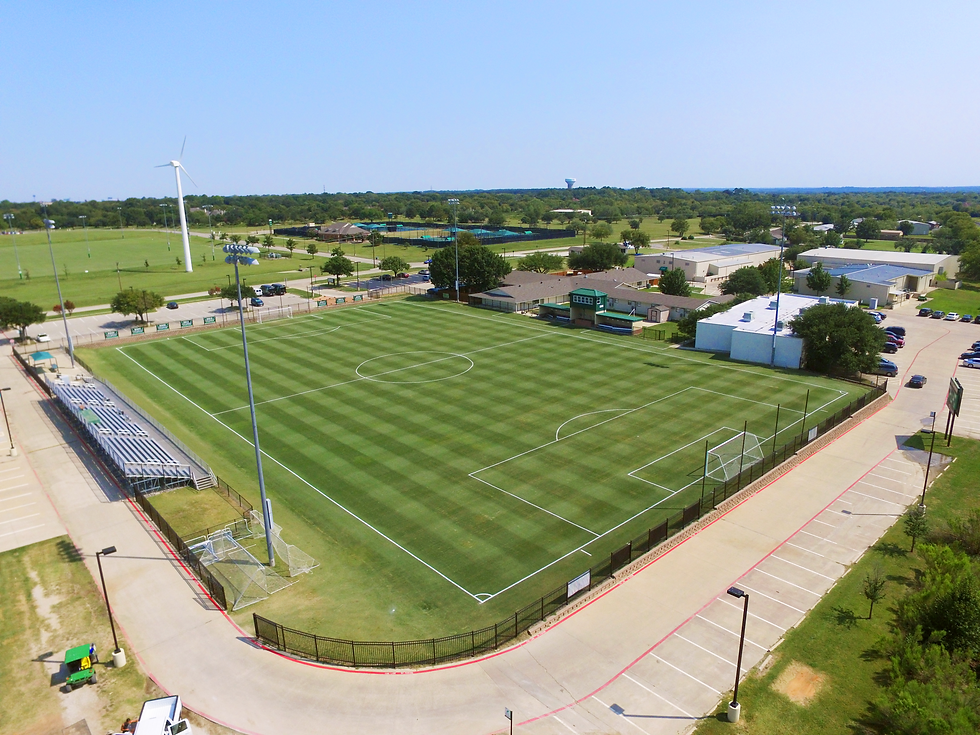
Clean edges, crisp lines, and healthy turfgrass signal care and investment before a single word is spoken. A worn or neglected field signals the opposite. In a competitive private school market, that signal has a real cost — and most Heads of School know it. The challenge is making that case hold up in a budget meeting.
Do families actually choose schools based on athletic facilities?
Yes — and not just families with student-athletes.
According to a National Association of Independent Schools (NAIS) parent motivations study, athletics consistently ranks among the top non-academic reasons families choose a private school. For families with college-bound athletes, your facilities are often part of their formal evaluation — they want to know their son or daughter will be playing on a surface that matches the level of competition they're preparing for. But the effect isn't limited to athletic families.
For full-pay families comparing multiple private schools, strong athletic programs and attractive facilities can be the tiebreaker. A vibrant, well-maintained campus signals a well-rounded student experience. Families aren't just buying an academic program — they're buying into an environment.
Research from BHDP Architecture found that among four-year private institutions, 91% of enrollment officers rate the campus visit as "very" or "extremely" important to the enrollment decision — and that athletic and recreation facilities rank among the spaces where families are hardest to impress. That's not a coincidence. It's an opportunity.
What do your fields say about your institution right now?
First impressions don't just shape perception — they shape decisions. A family that tours your campus and sees neglected fields doesn't think "maintenance issue." They think "this program isn't a priority here." That conclusion affects whether they come back, whether they enroll, and whether they tell other families to visit.
A field that's game-ready, properly graded, and professionally maintained sends a message that reassures families on three levels:
You invest in the full student experience — not just the classroom
You prioritize safety and performance for your athletes
You support your coaches and programs at a level that attracts serious families
A field with drainage problems, bare wear patterns, or inconsistent turf quality sends a different message — that facilities aren't a priority. In a competitive enrollment environment, that's a message you can't afford to send.
There's also a hosting dimension worth considering. High-quality fields open doors to club tournaments, showcases, and summer camps that bring prospective families directly onto your campus. That's organic enrollment marketing — but only if the fields are in a condition that makes families want to come back.
Are field upgrades a strategic investment or just a cosmetic one?
Strategic. Every time.
We've worked with private schools across Texas who've made targeted field improvements — laser grading, infield renovation, overseeding, professional maintenance programs — and seen the results show up not just visually, but culturally. Coaches feel supported. Athletes perform better. Families notice.
The investment doesn't have to be a full renovation to make an impact. Some of the highest-return improvements are also the most targeted: fixing drainage that makes a field look neglected even on dry days, restoring bare wear patterns at traffic zones, establishing crisp field striping and edge work that signals a program that pays attention to detail.
The question worth asking before the next tour season isn't "can we afford to improve our fields?" It's "what is it costing us not to?"
Is your field ready for tour season?
If your athletic facilities aren't where you'd like them before families start visiting, let's walk them together. We'll identify the highest-impact improvements for your specific situation — no obligation, just clear expert feedback from people who've managed fields at private schools across Texas for over a decade.
FREQUENTLY ASKED QUESTIONS
How do athletic facilities affect private school enrollment?
Research consistently shows that facility quality influences family decision-making during campus tours. A well-maintained athletic field signals institutional investment, safety, and pride — all factors families weigh before choosing a school. For families with student-athletes, the condition of practice and competition surfaces is often a direct factor in the enrollment decision. For non-athlete families, strong facilities signal a well-rounded, well-resourced program.
What do families look for when touring a private school campus?
Families on campus tours are reading signals about values, investment, and care. Athletic fields are among the first outdoor spaces families encounter, and their condition makes an immediate impression. Clean edges, level surfaces, and healthy turf communicate that the school prioritizes the full student experience. Worn or neglected fields communicate the opposite — often before a single word is spoken by an admissions representative.
How much does it cost to improve a private school athletic field before tour season?
Costs vary significantly depending on the field's current condition and what improvements are needed. Targeted work — laser grading, infield renovation, or overseeding — can deliver high-impact visual results at a fraction of full renovation cost. A field walk assessment from SFS is the right first step: we'll identify the highest-impact improvements for your specific situation and give you a realistic budget range before you commit to anything.
How often should private school athletic fields be professionally maintained?
Most private schools benefit from a maintenance program that includes regular mowing and line striping, seasonal cultural practices (aeration, topdressing, overseeding), and proactive monitoring for wear, drainage issues, and turf health. The right frequency depends on field usage, grass type, and Texas climate demands. SFS manages fields at private schools across Texas and can tailor a program to your schedule and budget.
What's the fastest improvement we can make to our athletic fields before families visit?
The highest-impact, fastest-turnaround improvements are usually laser grading (fixes drainage and visual unevenness), infield renovation (removes bare or compacted areas), and fresh striping with clean edge work. These can transform a field's appearance and playability in a short window. SFS can assess your fields and prioritize what will have the greatest visual and functional impact for your specific tour season timeline.


Comments